

Produced & Sourced by 100% US Manufacturers
USP-Grade Bacteriostatic Water for Peptides
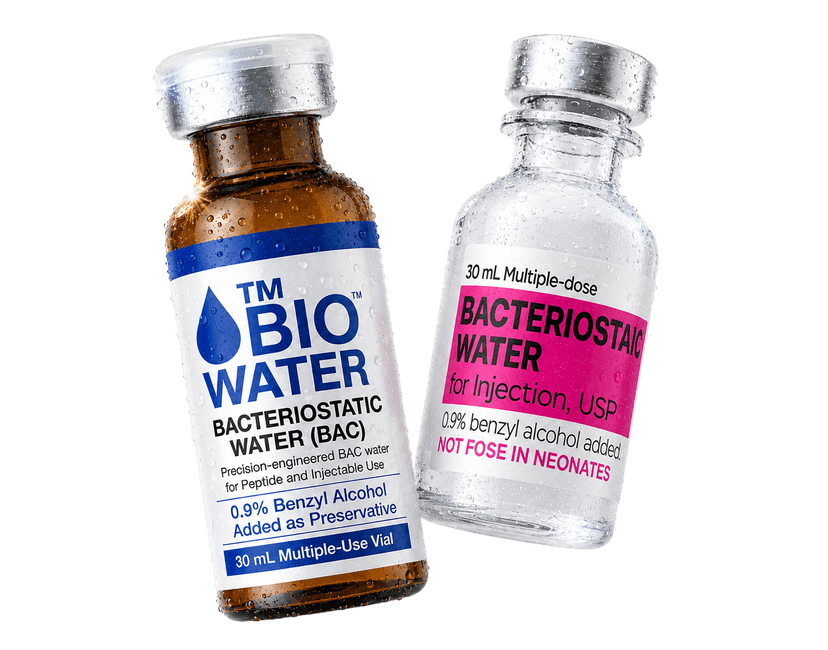
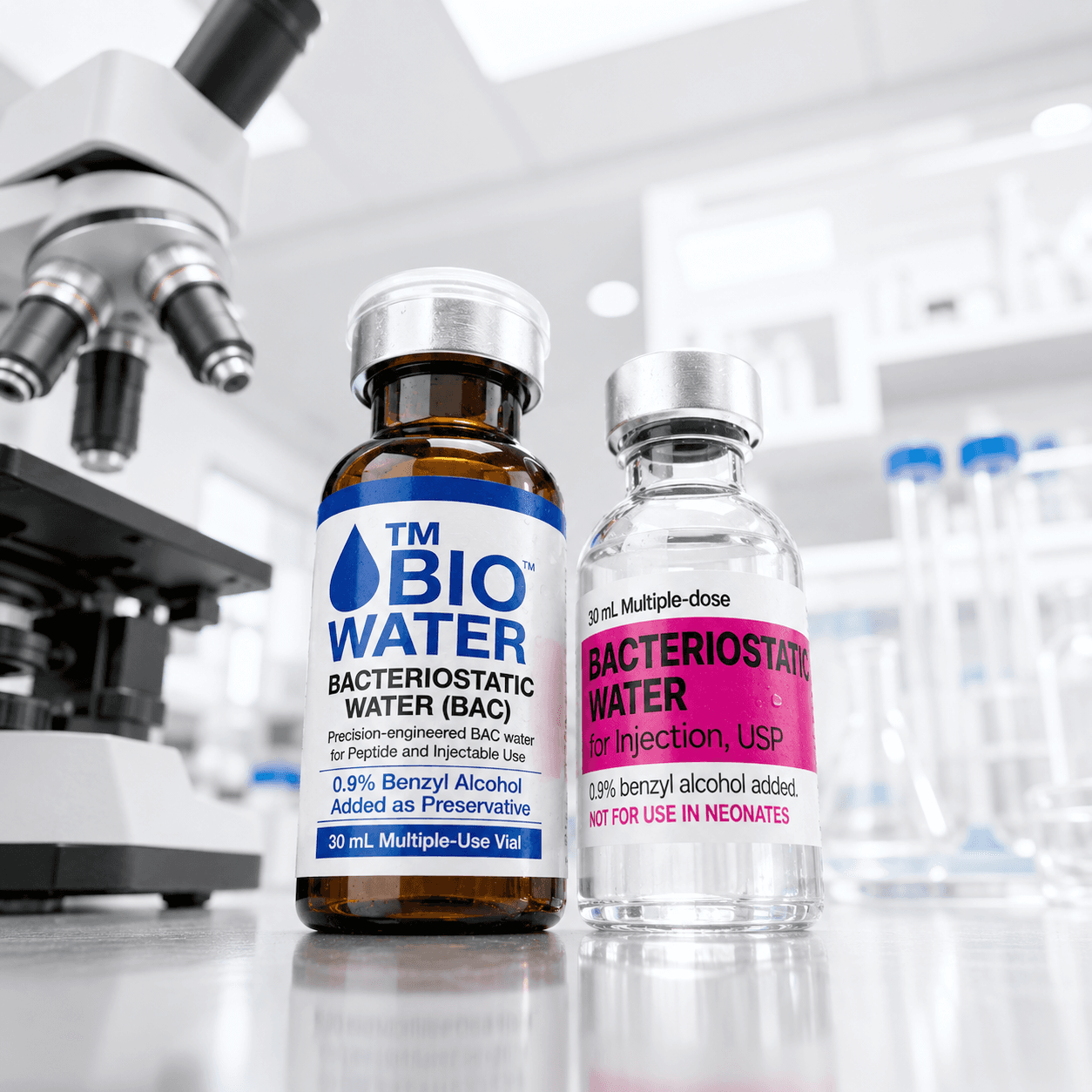
Bacteriostatic Water for Injection, USP — sterile water preserved with 0.9% benzyl alcohol, in 30 mL multi-dose vials, produced in an FDA-registered facility in the United States and shipped from the USA. Supplied for research use only.

Bacteriostatic Water for Injection, USP

FDA-registered U.S. facility

30 mL multi-dose · 0.9% benzyl alcohol
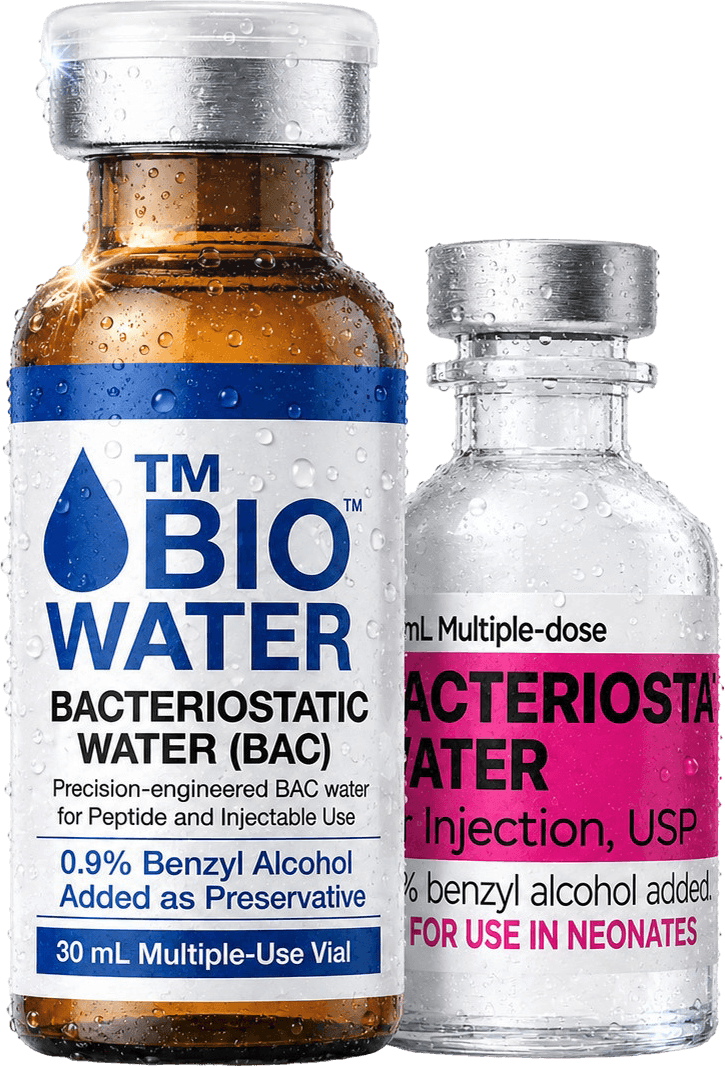




Advanced BAC Water for Medical Research

Quality-Controlled
Research Supply

0.9% Benzyl Alcohol
Preservative System

Professional Medical
Research Workflows
Bacteriostatic Water for Professional Medical Research





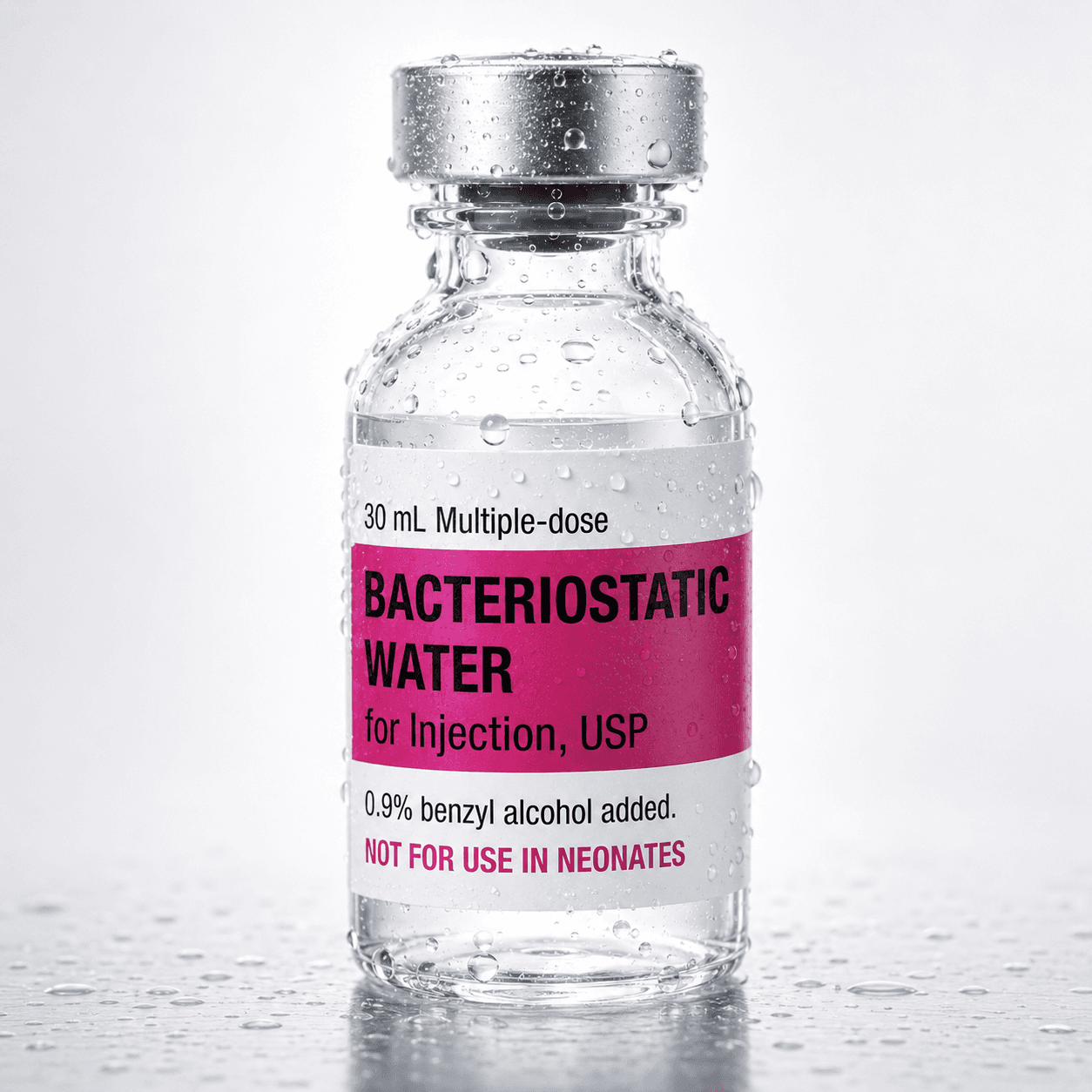
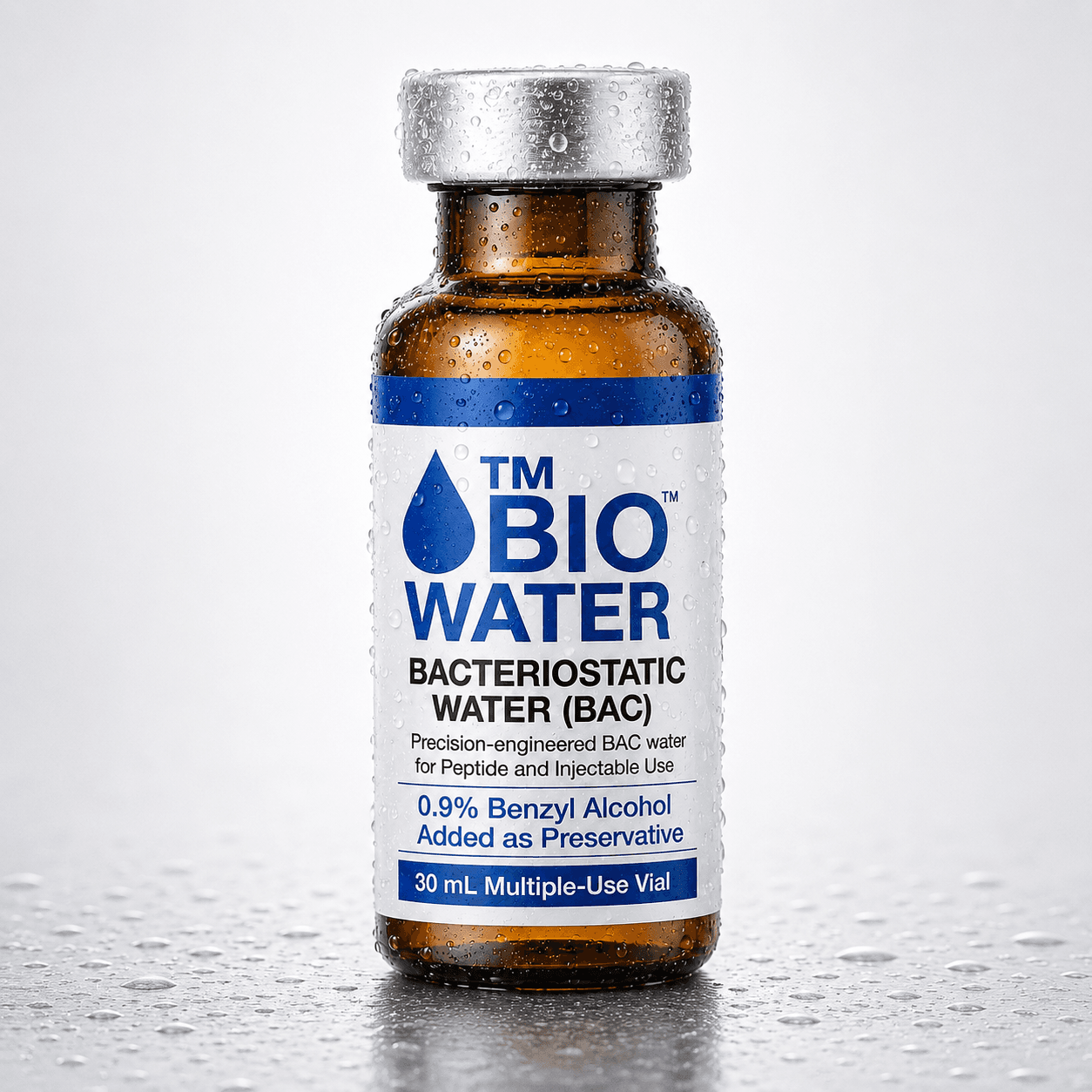
Shop Bacteriostatic Water for Peptides
30 mL vials with a 0.9% benzyl alcohol preservative system, supplied for peptide reconstitution and controlled liquid preparation in research settings.
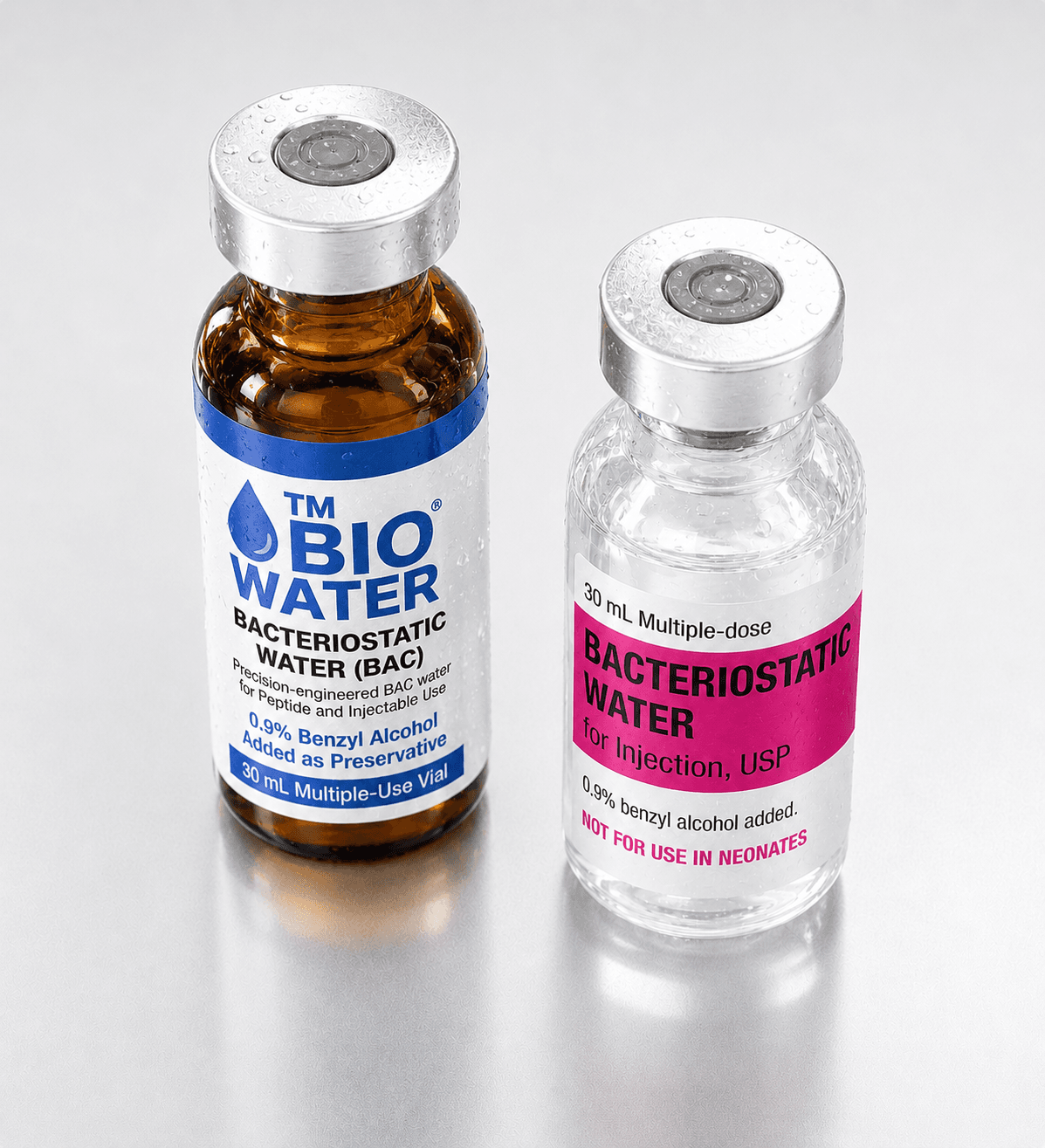
USP-Grade Bacteriostatic Water from an FDA-Registered U.S. Facility
What Medibact stocks is Bacteriostatic Water for Injection, USP — sterile water preserved with 0.9% benzyl alcohol, filled into 30 mL multi-dose vials. The benzyl alcohol is the preservative that makes a vial re-enterable rather than single-use, which is why bacteriostatic water rather than plain sterile water is the standard diluent for reconstituting a vial that will be drawn from more than once.
The Specification, Stated So It Can Be Checked
Provenance claims are only useful if they are specific enough to verify. Here is exactly what is in the vial and where it came from:
 Bacteriostatic Water for Injection, USP (Sterile Water for Injection, USP with 0.9% benzyl alcohol)
- 30 mL multi-dose vial — the standard research-supply format
- Produced in an FDA-registered facility in the United States
- Shipped from the USA, in Standard and TM listings of the same underlying specification
- Supplied for research use only
Benefits of Bacteriostatic Water in Medical Research
30 mL research supply vial
Designed for controlled handling in professional research settings.
30mL

Efficient use across multiple applications
Consistent research workflows
Supports dependable liquid preparation for professional medical research workflows.

Maintains consistency across research workflows
0.9% Benzyl Alcohol formulation
Helps inhibit bacterial growth and supports controlled laboratory handling.
0.9%

Reduced contamination risk during handling
Storage and In-Use Handling, in Specifics
Bacteriostatic water is stored at controlled room temperature, away from light — refrigeration is not required and it should not be frozen. Because the vial is preserved and multi-dose, the practical limit is not the shelf life of an unopened vial but how long it stays in use after the stopper is first pierced.
How USP-Grade Documentation Actually Works
Brand-name USP product is released against a monograph rather than shipped with a per-batch third-party certificate. The practical points that follow from that:
- Product labeling for multi-dose bacteriostatic water commonly specifies discarding the vial 28 days after first puncture
- USP-grade product is released against the USP monograph — the label claim plus the lot number are the documentation trail
- That differs from the per-batch third-party COAs common in the grey research-chemical market
- Store away from light at controlled room temperature; do not freeze
Peptide Guide Library
Structured educational guides designed to help researchers review peptide terminology, study context, and reconstitution math concepts in one place.
Bacteriostatic Water & Reconstitution Guides
Educational articles covering bacteriostatic water, sourcing considerations, and reconstitution math for research settings.
Advanced BAC Water for Medical Research
Quality-Controlled
Research Supply
0.9% Benzyl Alcohol
Preservative System
Professional Medical
Research Workflows
Frequently Asked Questions (FAQs)
Please visit our FAQ page before reaching out to our customer support. Our team regularly updates this resource to provide you with the most up-to-date and comprehensive information, saving you valuable time.